
Almost every overrun we are asked to rescue traces back to the same root cause: a price given before anybody looked behind the walls.
A homeowner shows us a quotation. It is four pages long, it arrived five days after the contractor first walked the house, and it is eleven per cent cheaper than ours. Nine months later the same homeowner is at forty per cent over that number and the contractor has left. We see some version of this several times a year, and the cause is almost never dishonesty. It is arithmetic performed on information nobody had.
A price is a claim about the unknown
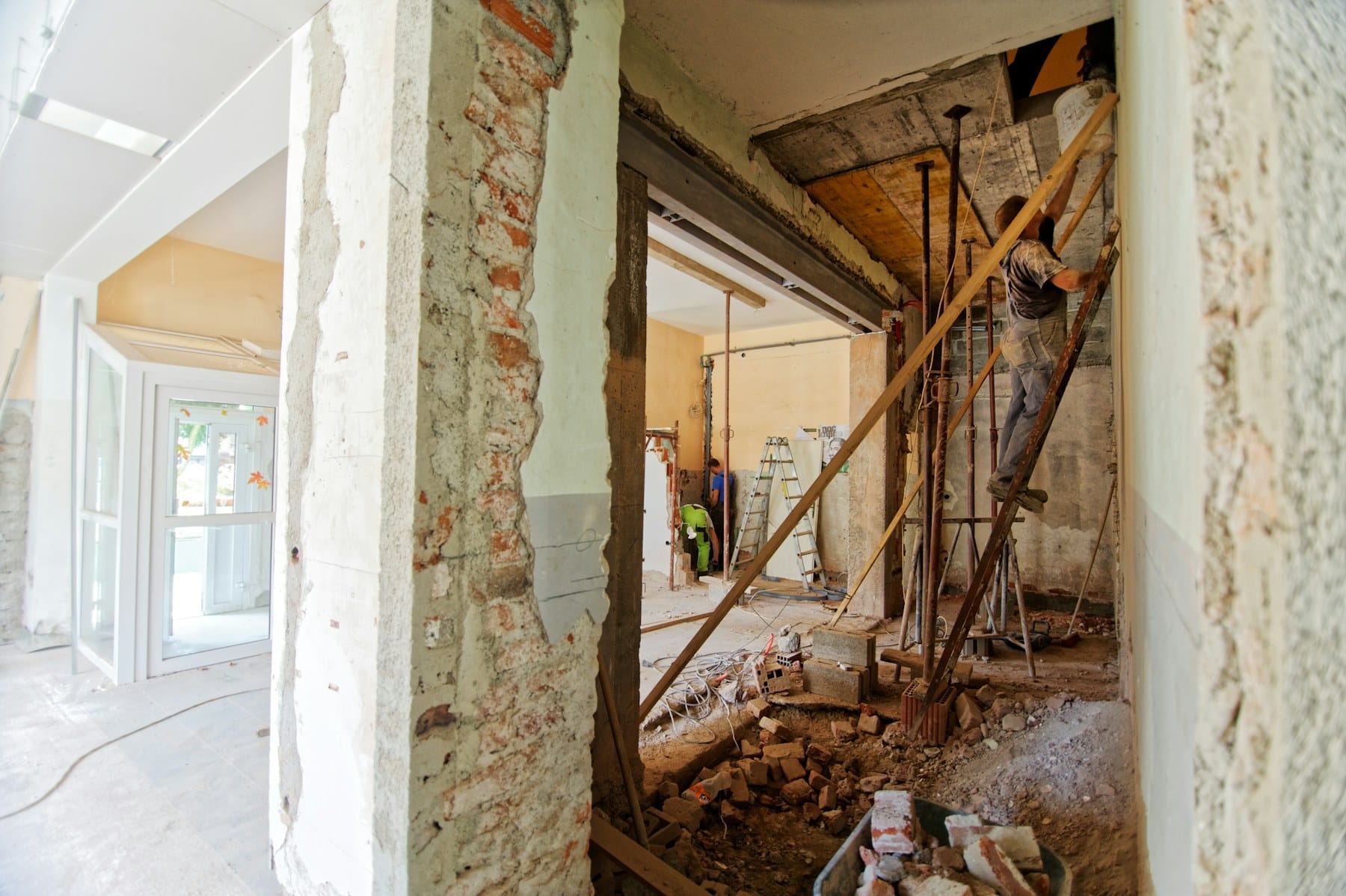
When a contractor prices a renovation in five days, they have seen the finishes and nothing else. They have not traced the drainage, opened a wall, tested the distribution board or established whether the slab is where the original drawings say it is. Every one of those unknowns has a cost attached, and the contractor has three options: guess high and lose the job, guess low and recover it later through variations, or find out first.
In a competitive market with cost-sensitive clients, the second option wins work. This is why the cheapest quotation is so often the most expensive project.
What actually goes wrong
Across the projects we have been called in to complete, the recurring discoveries are remarkably consistent:
- Drainage falls that do not run where the drawings show, requiring floor build-ups nobody budgeted for.
- Distribution boards at capacity, so any added cooling or kitchen load means a DEWA upgrade application.
- Waterproofing in wet areas that was never tanked, only sealed at the surface — invisible until the ceiling below stains.
- Structural walls shown as partitions, discovered at the moment of demolition.
- Chilled-water or split systems sized for the original plan, not the open-plan one now being built.
None of these is exotic. All of them are findable in advance. None of them is findable in five days.
The survey is the whole argument
We charge for a three-week technical survey before we will give a construction price, and we lose a certain number of prospective clients at exactly that sentence. The survey involves a laser-measured model of the building, CCTV of the drainage, an electrical and cooling assessment, and selected opening-up works — small, deliberate holes in the right places, made good afterwards.
“A free survey is not a survey. It is a sales visit with a tape measure.”
What it buys is the ability to commit. Because we know what is behind the wall, we can issue a fixed price and hold it. Across our last forty projects the final account has landed within an average of two per cent of the contract sum, and in most of those cases the two per cent was a change the client chose to make.
Questions worth asking any contractor
- What investigation will you carry out before you give me a price, and what will it cost?
- Is your price fixed against a written specification, and may I see that specification?
- Under what circumstances can this number change, in writing?
- May I speak to a client whose final account was higher than their contract sum?
The last question is the useful one. Every contractor has a project that went over. The ones worth hiring will tell you about it, explain why, and put you in touch with the client anyway.