
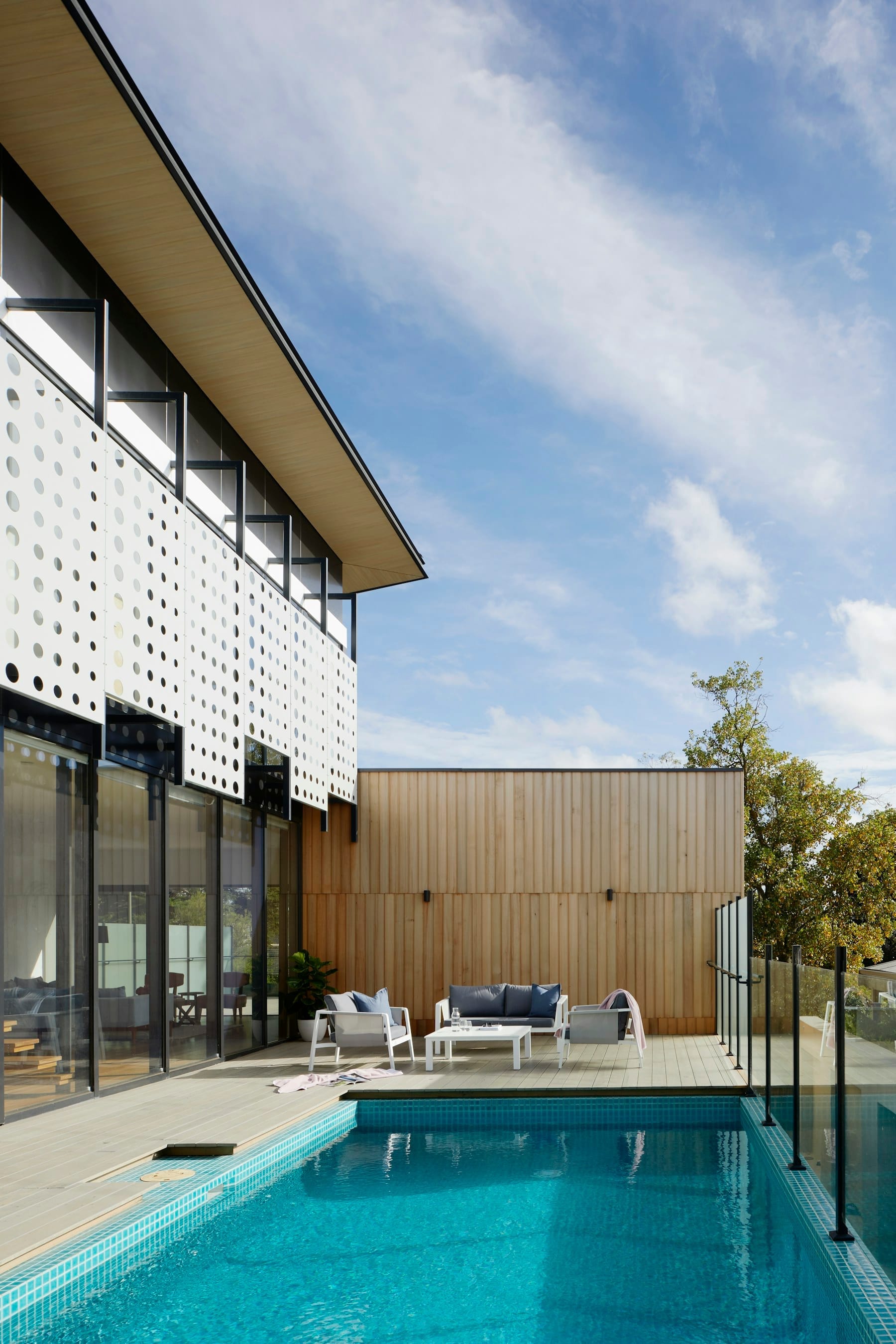
Shading, orientation and thermal mass do more for comfort than any amount of installed cooling capacity — and they cost less to run for the next thirty years.
The default response to Gulf heat is mechanical: install more cooling. It works, in the sense that the house reaches setpoint. It also produces a building that is expensive to run, uncomfortable near the glass, and entirely dependent on plant that will need replacing twice in your ownership. The alternative is to stop the heat before it arrives.
Shading is the highest-return decision you will make
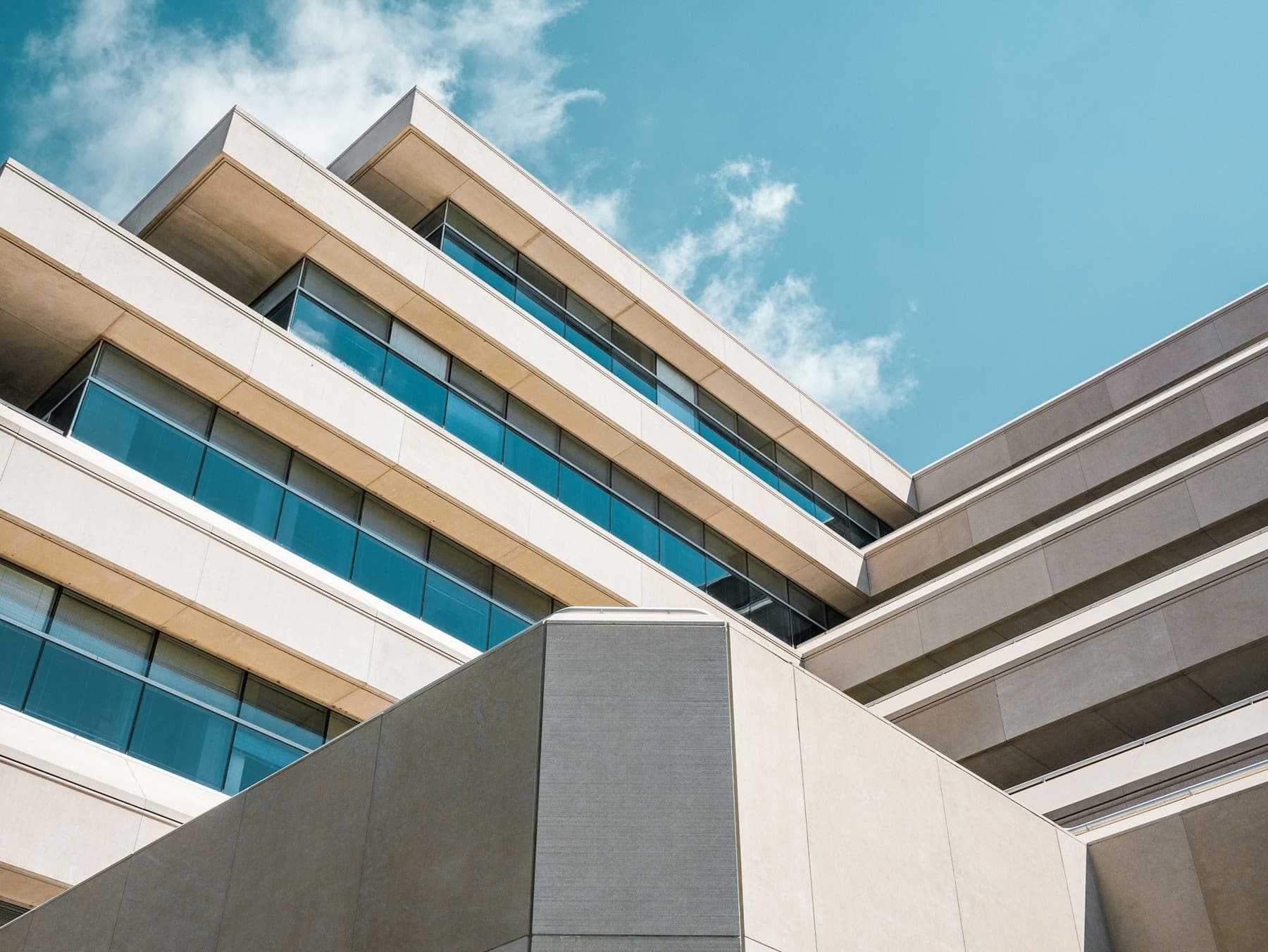
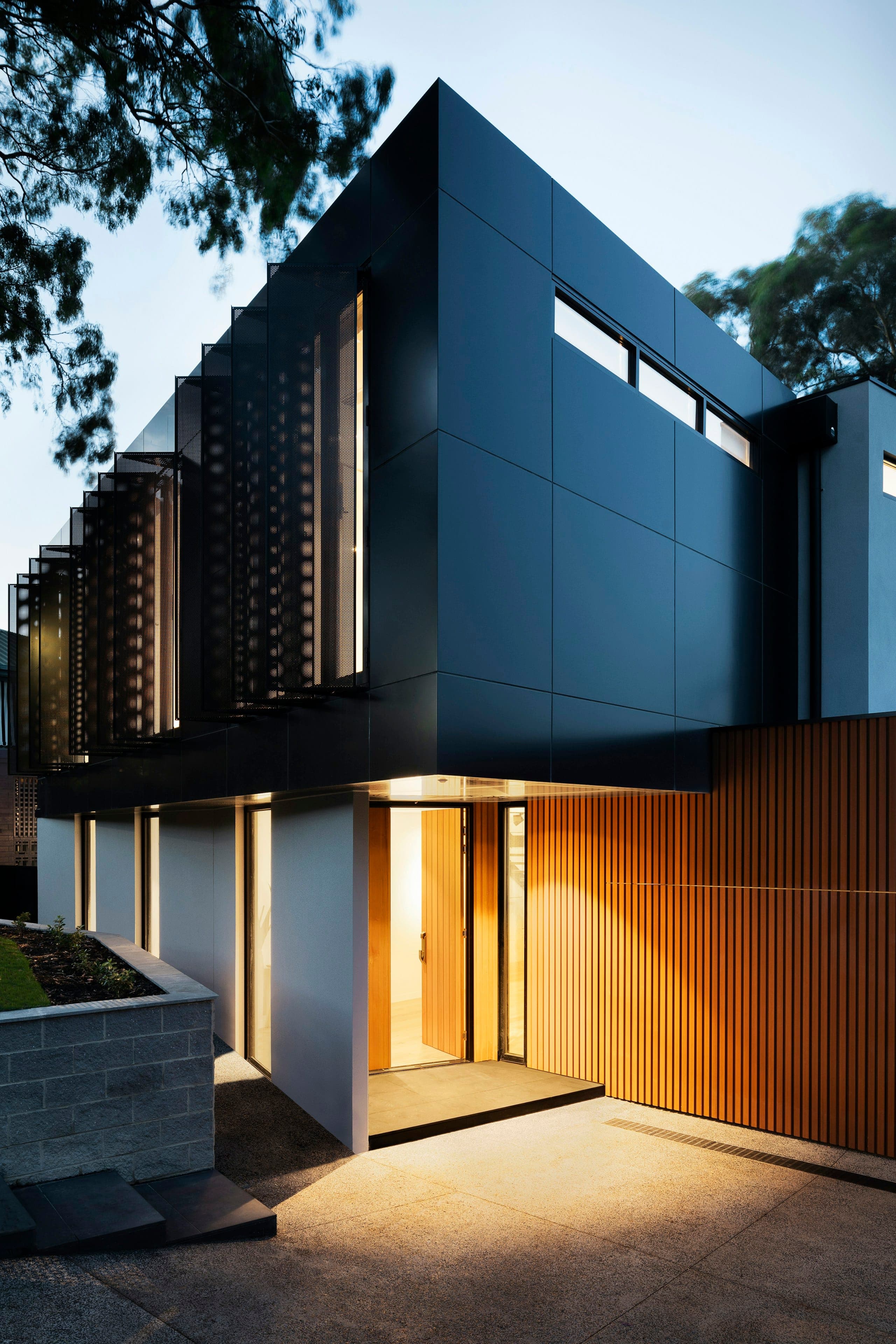
Direct solar gain through glazing is the single largest cooling load in a typical Dubai villa. A square metre of unshaded west-facing glass can admit several hundred watts at four o'clock in July. The same square metre behind a deep reveal, a brise-soleil or a colonnade admits a fraction of it — while the view through it is unchanged.
This is why our façades tend to have depth. At Sarab House the entire west elevation sits behind a two-storey colonnade of stone piers. The lake view is completely open; the glass sees no direct sun after two in the afternoon. The house holds setpoint through a July afternoon on roughly two-thirds of the cooling capacity a comparable villa would install.
Orientation is free, and it is decided once
On a new-build plot, which way the principal rooms face is the cheapest decision in the project and the most permanent. Living spaces to the north and east, service and circulation to the west, sleeping accommodation where it will be cool at night rather than where the view happens to be best at noon.
“Orientation costs nothing at concept stage and cannot be bought back at any price once the foundations are poured.”
Glass specification is not a single number
Homeowners are usually shown a U-value. In this climate the more consequential figure is the solar heat gain coefficient — how much of the sun's energy the glazing lets through. A low-e double-glazed unit with a well-chosen coating can cut solar gain substantially without the grey cast that makes a room feel like an aquarium. Specify both numbers, and specify them per elevation rather than for the whole house.
Mass, and why it matters at night
Heavy construction — concrete, stone, thick blockwork — absorbs heat slowly during the day and releases it slowly at night. In a desert climate with a large diurnal swing this smooths the load on the cooling system and makes rooms feel steadier. Lightweight construction with a lot of glass does the opposite: it tracks the outside temperature almost immediately.
Air movement, which we mostly forget
For roughly five months of the year, Dubai's evenings are pleasant. A house that cannot be opened up cannot take advantage of them. Cross-ventilation, stack effect through a stairwell, and — in the local idiom — wind towers all extend the shoulder seasons. At Barajeel Villa a pair of contemporary barajeel above the roof terrace let the upper floor run on natural ventilation for about five months annually.
None of this is a rejection of air conditioning. It is a way of making sure the air conditioning is doing a job the building has already made small.